
Timeless Elegance of Ferns
Tony & Sylvia Marden from shadyplants.com based in Gloucestershire - 02 April 2026
The Timeless Elegance of Ferns
Ferns are nature's architects of the shade garden. These non-flowering plants which flourished during the time of the dinosaur still have a place in the garden today. They can be used to create an interesting area with very low maintenance.
Their new foliage, called fronds, can be fascinating to watch unfurl in the Spring. Most of the varieties we sell are evergreen. The only maintenance we do to our fern bed in the Spring is to spread a layer of old potting compost over the old fronds as they fall down which they naturally do.
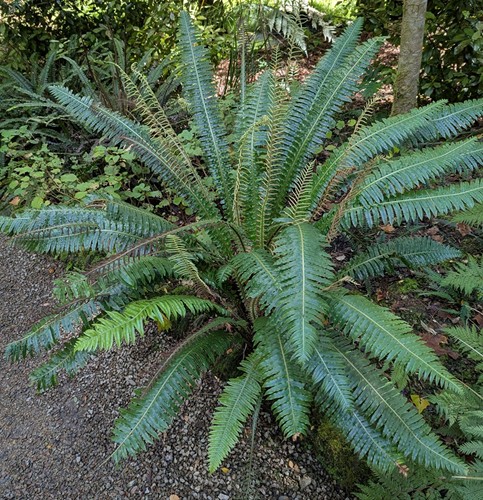
Choosing the Right Fern
There's a fern for every shaded condition, whether you have moist, rich soil or a challenging patch of dry shade.
For Moist, Deep Shade:
Matteuccia struthiopteris - The Ostrich Fern is a magnificent choice, forming tall, elegant "shuttlecocks" of fronds.
Onoclea sensibilis is a damp loving fern that has Autumn colours.
Osmunda regalis can make a very large fern if its roots are wet. (It will also take full sun if wet at the roots).
For Dry Shade:
The term "dry shade" often strikes fear into gardeners' hearts, but even here, ferns can thrive.
A lot of species within Dryopteris (eg Dryopteris affinis) are good doers. The selection Dryopteris affinis ‘The King’ is a real toughie! By the way, Dryopteris affinis and it’s selections also seem to cope well with sunshine.
Polystichum setiferum selections are among the best for these tough spots, showing remarkable resilience once established.
To the casual observer a lot of ferns seem very similar when small, but they exhibit their characteristics as they mature.
We sell a variety of mostly evergreen ferns.
Cultivation Tips for Ferns
Most ferns prefer partial to full shade and humus-rich, well-drained soil. They aren't fond of direct, hot afternoon sun, which can scorch their delicate fronds.
A key to success is to replicate their natural woodland environment:
1. Enrich the soil: If you have it, mix plenty of organic matter, such as leaf mould or compost, into the planting hole.
2. Maintain moisture: While some varieties tolerate dryness, most ferns prefer consistently damp soil. If you can, apply a thick layer of organic mulch annually it helps retain moisture and suppresses weeds, as well as feeding the plants.
We did notice last year during one of the driest Summers that the native ferns growing in the woods locally tolerated it very well and still looked good when other herbaceous plants had died away.
3. When planting (if you have the space) We like to see groups of the same variety interspersed with one specimen plant as would appear in nature.
Other Plants for a Shady Area – Stars of the Woodland Garden
A wide variety of woodland plants combine very successfully with ferns -
Saxifraga stolonifera is often used as an attractive groundcover, this plant features rounded, hairy leaves that are silver-veined on top and reddish-purple beneath. It spreads rapidly via strawberry-like runners (stolons), quickly forming a dense, colourful mat in moist, shaded areas.
Asarum europaeum is a good evergreen ground cover with glossy leaves.
Galium odoratum is a good ground cover if you have the space. Maybe too vigorous for some! It has white flowers.
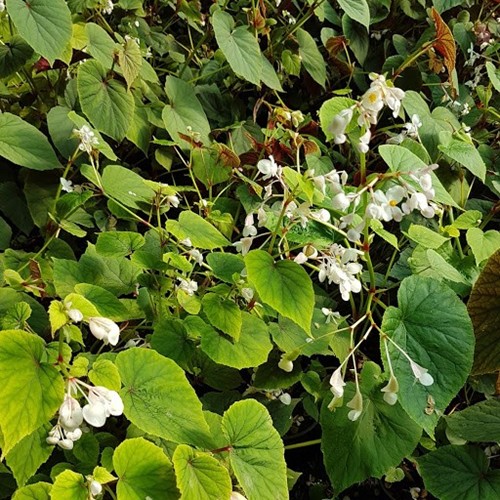
Begonia grandis ssp. evansiana (Hardy Begonia) is one of my favourite plants of which we have a number of distinct forms. This is reliably hardy in our climate, making it a unique and valuable addition to the shade border. They have heart-shaped leaves, some have striking reddish undersides (such as ‘Claret Jug’). Some are just red-veined and one is a lime green with a white flower. This is my favourite as it shows up well in shade. From late summer well into autumn, it produces sprays of delicate pink or white flowers. It thrives in well-drained soil and partial to full shade. They propagate by bulbils which form in the leaf axils as they become dormant for the Winter; these produce extra plants next Spring.
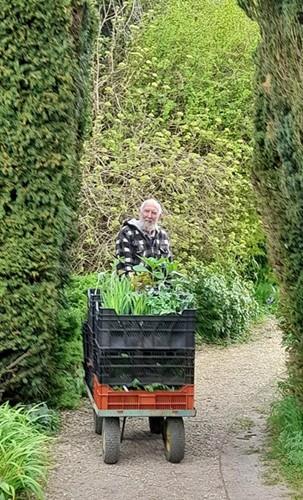
Do come to meet us at a fair - Tony & Sylvia
Website: www.shadyplants.com
Fairs
Past Fairs:
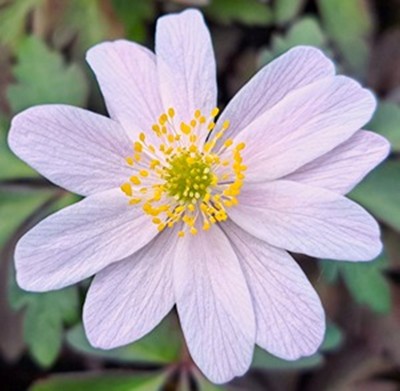 Wood Anemones - Delicate Spring Beauties - Read More..
 Easy Reliable Alpines Part 1 - Read More..
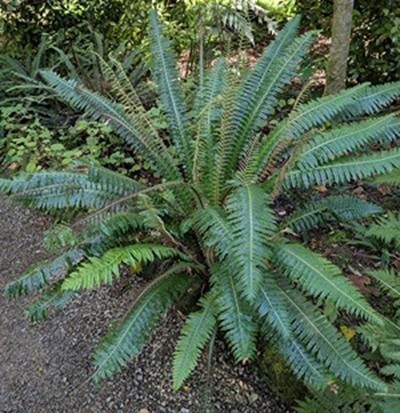 Timeless Elegance of Ferns - Read More..
 The joy of Hardy Cyclamen - Read More..
 Wildflowers in Practice - Read More..
