
Wood Anemones - Delicate Spring Beauties
Gary Leaver from Avondale Nursery based in Baginton, West Midlands - 02 April 2026
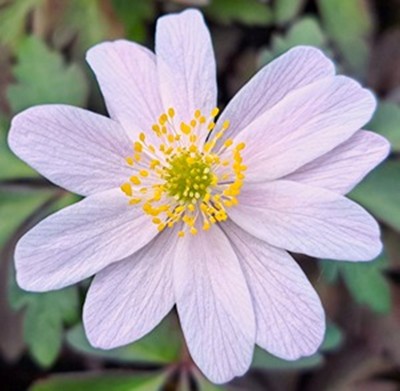
Our native wood anemone, Anemone nemorosa, can be seen in the wild all over the country where it forms a carpet of starry white flowers in springtime.
Following on from the snowdrops, anemones cross over with the flowering of bluebells where they can make a beautiful tapestry on a sunny woodland floor. The single flowers usually consist of 6 to 7 petal like sepals or tepals but there is a degree of variation with some forms having as many as 11.
A member of the buttercup or Ranunculaceae family Anemone nemorosa has a large range and is found throughout Northern and Central Europe, where we primarily see it growing in deciduous woodland, but it can also be found growing along hedgerows, on heathland and in mountainous regions. Shoots generally emerge in early March depending on the season, when there is plenty of light before the tree canopy fully emerges.
Although predominantly white in the wild there have been blue and pink varieties discovered, with particular concentrations of the former found in the Midlands and Ireland. One notable blue introduction is ‘Lismore Blue’ which was collected by Frances Curry of Warren Gardens in the early 20th century from the glens north of Lismore in County Waterford, Ireland.
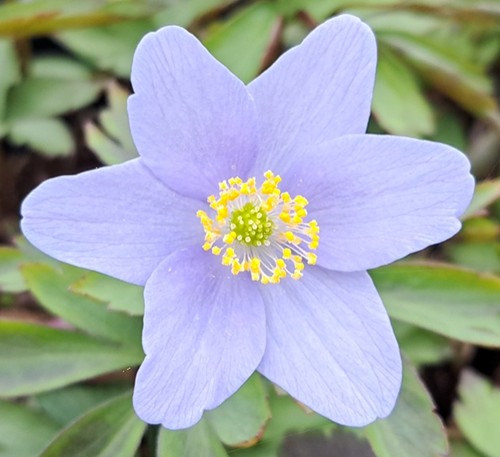
Anemone nemorosa 'Robinsoniana'
Another notable introduction is ‘Robinsoniana’ named for the famous garden writer William Robinson and grown at Oxford Botanic Gardens. This variety also has the RHS Award of Garden Merit.
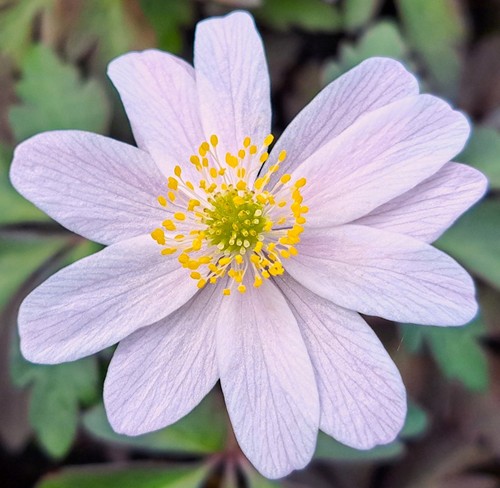
Anemone nemorosa 'Evelyn Meadows'
There are many lovely pink cultivars to be found and one of my favourites is ‘Evelyn Meadows’. It was found in the Picos Mountains by Richard Nutt where anemones can be found growing in the open on damp slopes. Dark pink buds open to pale pink flowers above purple tinted foliage. It is worth noting that many pink anemones are white when they first open and darken to pink as they age.
Alongside the single colour forms there are many new flower variations, many of them weird and wonderful, but often occurring naturally and spotted by keen collectors in many countries.
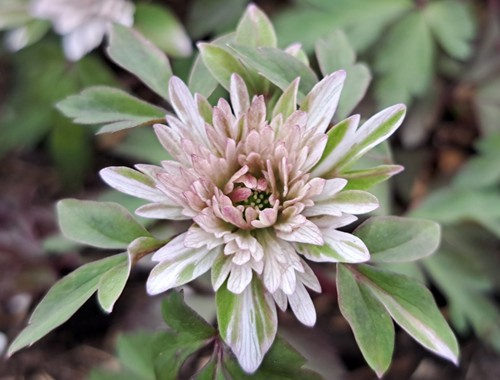
Anemone nemorosa 'Stammerberg'
One such variety is ‘Stammerberg’ found on a Swiss mountain by Matthias Thomsen. It is unusual in that the centre of the flower has a semi-double arrangement of pink-tinged white petals, while the outer merges into green bracts.
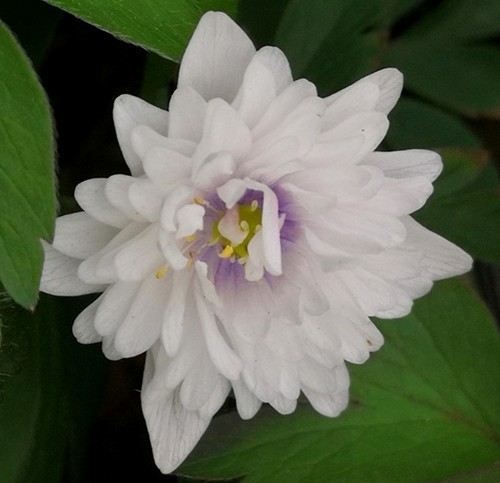
Anemone nemorosa 'Blue Eyes'
‘Blue Eyes’ is a beautiful white semi-double flower with a dark blue centre. It can be slightly variable in colour and can take a few years to settle in but is well worth the wait.
Anemones will thrive in any shady spot that has a good level of moisture during the spring and reasonable light levels. Underneath deciduous trees and shrubs in a soil that has a good level of organic matter is ideal. Although they look delicate they are very hardy, growing reliably down to -15 degrees Celsius, but the flowers do close in poor weather.
They do not readily set seed so rely on their thin rhizomes spreading through leaf mould just under the surface. This means that populations can spread slowly in the wild and they are a good indicator of ancient woodland. It is suggested that it can take 100 years to expand to 6 feet. A disadvantage of this reproduction strategy is that colonies can be easily lost if their habitat is adversely affected by climate change, for example.
In a garden setting they can become a respectable sized clump in several years providing they are planted in an area where they don’t get disturbed. They are difficult to see when dormant as the rhizomes are small thin brown twigs and are easily dug up by mistake when dormant.
At Avondale Nursery, we grow our collection of wood anemones in large containers rather than in the garden, where we can keep a close eye on them. This avoids them growing into each other or being overwhelmed by other herbaceous plants in the borders. It is also easy to propagate them on the bench and keep them fed and watered as needed. They are re-potted every year when dormant, their condition noted, and if sufficient rhizomes are available we pot these on and offer them for sale.
Visitors to the nursery can see our National Collection on display in flower from mid-March, which is open from Wednesday to Sunday 10am to 4pm. There is also a section of the website which provides information on all the cultivars in our collection.
Website: www.avondalenursery.co.uk
Fairs
Past Fairs:
 Wood Anemones - Delicate Spring Beauties - Read More..
 Easy Reliable Alpines Part 1 - Read More..
 Timeless Elegance of Ferns - Read More..
 The joy of Hardy Cyclamen - Read More..
 Wildflowers in Practice - Read More..
