
Climbing Something New
by Charlie Pridham from Roseland House Nursery based in Chacewater, Cornwall. He shares his knowledge and passion for climbers - 30 April 2026
It is easy to see why some plants are not seen as often as their qualities would suggest they should be - Akebia longiracemosa is one such.
This is because it is a relatively recent introduction to the UK, an evergreen twiner with spectacular flowers in spring, flowering slightly later than the closely related Akebia quinata (The “Chocolate Vine”) and if pollinated by another Akebia it will produce large colourful edible fruits in the Autumn.
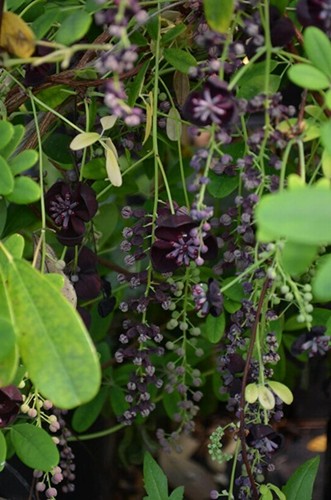
Akebia longiracemosa
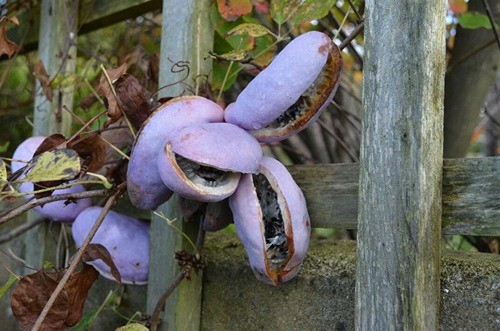
Akebia fruit
It is less easy to see why Holboellia coriacea, (to which Akebia are related), which are even more robustly evergreen with highly scented spring flowers (much loved by the bees), should be less planted than it is. The very pleasant scent is discernible 10 metres away.
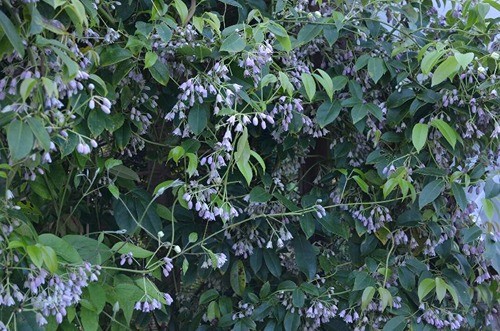
Holboellia coriacea
Again if pollinated it also has large colourful edible fruits in the Autumn, plus it makes an excellent evergreen screen quite quickly. Both these grow and flower in relatively shady conditions.
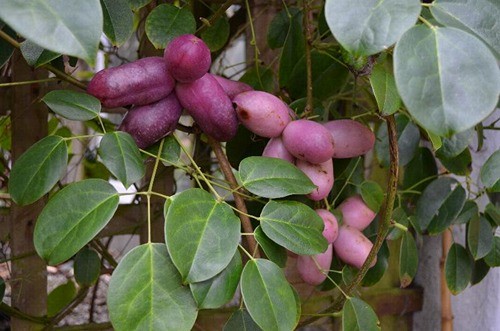
Holboellia coriacea fruit
Another firm favourite here is Dregea sinensis, a deciduous twiner, the scented flowers are produced in great profusion in summer, preferring a sunnier spot. It usually stops visitors in their tracks with both the look and smell of the flowers, easily living up to its common name of the “Hardy Hoya'
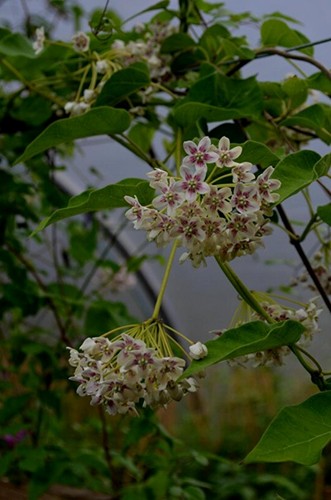
Dregea sinensis
While not scented, the orange flowers of Bomarea edulis are carried in great and long-lasting profusion in summer. Despite its South American origins (where the tubers are grown for food), it is perfectly hardy, easy to grow and spectacular to look at.
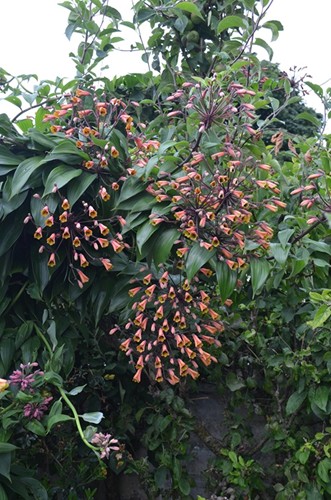
Bomarea edulis
Probably best grown on its own, we grow ours like runner beans on a wigwam. It dies down to the underground tubers in winter, comes back up in May, reaching around 2.4 metres by late June when it comes into flower. The flowers are followed in the autumn by seed pods which split open revealing bright orange seeds.
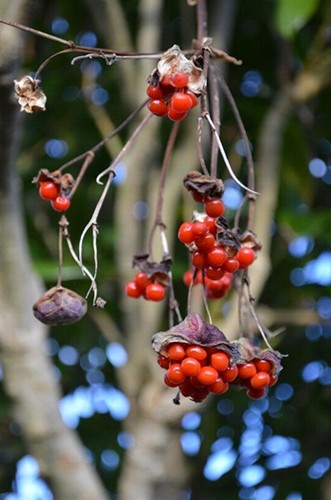
Bomarea edulis seed
Mandevilla laxa or “Chilean Jasmine” is both highly scented and has large eye-catching white flowers. It does best on a warm wall, but it truly earns its space.
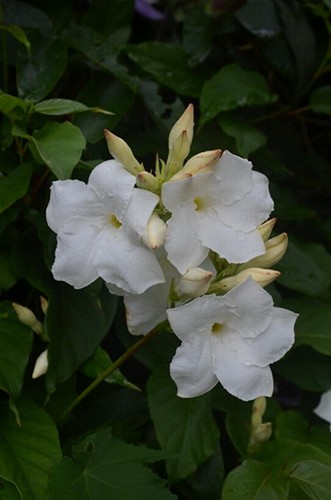
Mandevilla laxa
Another attractive flowering climber is Bignonia capreolata ‘Dragon Lady’. This red flowered form of a USA native will remain evergreen in sheltered areas and flowers on and off all season.
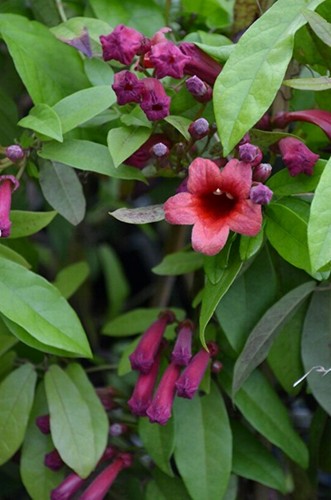
Bignonia capreolata 'Dragon Lady'
I feel I must give Cobaea pringlei a mention. This came to us many years ago from a gardening friend as a bag of seemingly dead roots and the information that it was a “hardy perennial climber” (which I didn’t believe to start with!). Then I put it in a pot in the conservatory and to my surprise what had looked like dead roots sprang back to life then set about world domination – even growing in a pot it is vigorous.
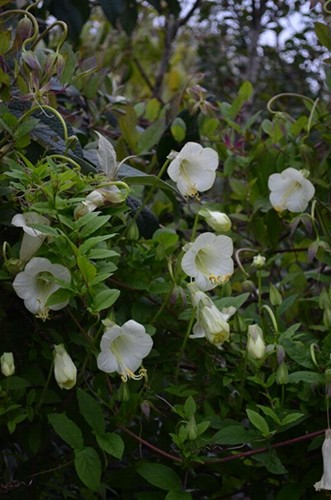
Cobaea pringlei
The next year it got planted outside where it has been for the last 30 years. It dies back each winter to below ground, then rockets up in May covering whatever you are growing it on and producing hundreds of its trade mark white cup flowers (no saucers unlike C. scandens). It doesn’t start flowering until September and carries on until the first hard air frost.
All the above are easy to grow plants, but if you like a bit of a challenge then have a go with Lapageria rosea the “Copihue”. The much loved national flower of Chile, this needs an ericaceous soil, cool conditions out of strong sunshine. Although not tender, it still prefers winter to remain above about -8 degrees Celsius and if happy will flower from early August to late April.
Individually the large waxy flowers hang down from the twining stems and in the wild would be pollinated by Humming Birds. It is unfortunately also slow growing to start with, taking a number of years to get going. Here at “Roseland House” we maintain a collection of the cultivars, many of them dating back hundreds of years in Chile. These eventually become strong growing evergreen twiners that live for a long time.
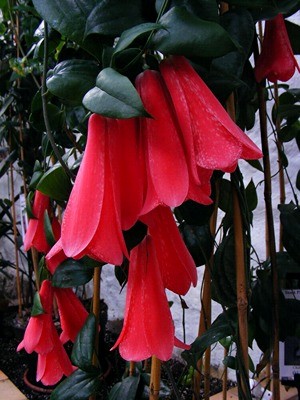
Lapageria rosea 'Beatrix Anderson'
Unusually for a climbing plant, Lapageria is a monocot and Lapageria rosea is the only species in the genus so there are no hybrids. First described for science in 1804, it was named Lapageria after Napolean Bonaparte’s wife Josephine whose maiden name was “de la Pagerie” Originally classified as a type of Lily it has now been moved to the family Philesiaceae.
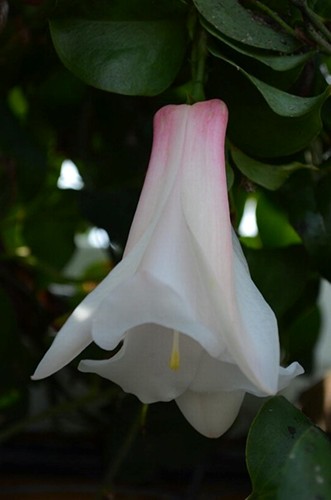
Lapageria rosea 'Hugletts Blush'
Website: www.roselandhouse.co.uk
Fairs
Past Fairs:
 Share our Enthusiasm for Echinacea - Read More..
 Fabulous Fronds - Start of our Journey - Read More..
 2027 Rare Plant Fair Dates - Read More..
 Fonthill House Garden - Read More..
 Thyme and Friends in the Garden & Kitchen - Read More..
