
Fonthill House Garden
by Jack Greenwood, Head Gardener at Fonthill House Gardens. This is a beautiful private garden in Wiltshire where on SATURDAY 4th JULY our NEW fair for 2026 will be held. - 26 June 2026
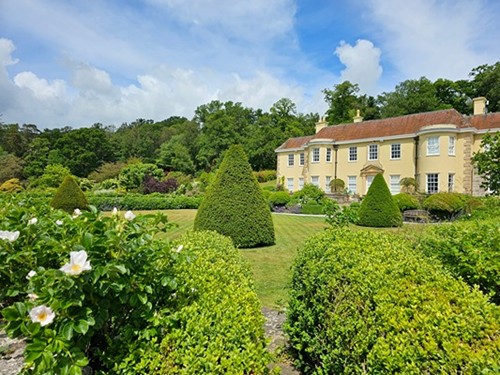
There’s a particular kind of English garden that feels less like it was planted and more like it simply happened, layer by layer, season by season, story by story. Fonthill is one of those places.
Set deep in the rolling countryside of Southwest Wiltshire, Fonthill House sits within an Estate shaped as much by imagination as by history. Often associated with William Beckford and his Gothic Fonthill Abbey, the landscape has seen centuries of reinvention, with several houses rising and falling here since the 16th century.
The present house, built in 1973 by John Morrison, stands on the site of an earlier house known as Little Ridge. His great-grandfather, James Morrison, once England’s most powerful textile wholesaler and a prominent merchant banker, first acquired the Estate in 1830. What began as 1,200 acres has grown into a remarkable 9,000-acre landscape. But it’s the gardens, 12 acres of them, designed by Tania Compton, that quietly steal the show.
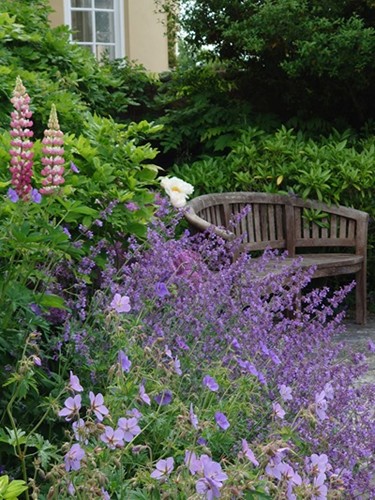
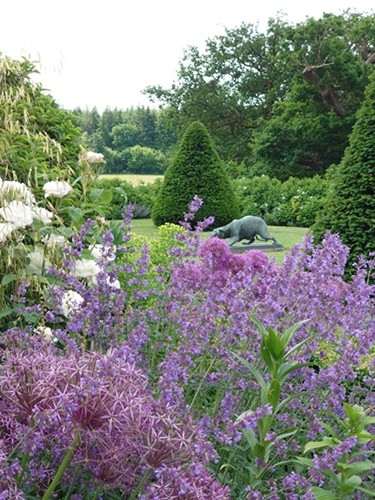
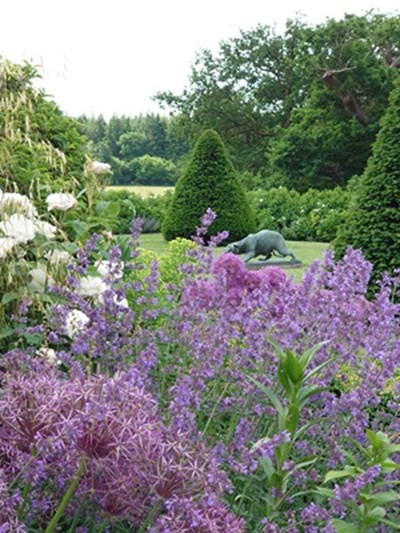
From the house, each window frames a different view. Closest lie the formal gardens, where generous borders spill over with the softness of an English summer. By June, early roses weave through Nepeta and hardy Geranium, while Digitalis, Lupinus, Allium and Delphinium rise above. As July unfolds, the colours deepen, Phlox, Achillea and Gaura bring movement, and Salvia begin to dominate, alive with bees.
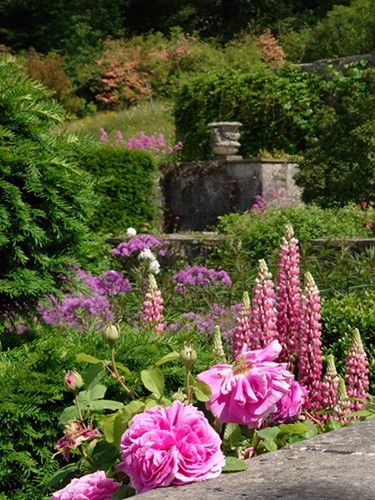
Step down into the walled sunken garden and the mood shifts. Here, summer arrives with confidence. salvias blaze in vivid colour, framed by the bold leaves of Tetrapanax and Musa, while Brugmansia hangs its scented trumpets in the still air. Newly planted Salix alba ‘Vitellina Nova’, pollarded to provide winter structure and amazing coloured stems (this selection is scarlet compared to the gold of the more familiar S.a. vitellena), rise above long grasses and wildflowers that hum with life. Tucked within the bastion wall, a cool fern cave offers a welcome pause from the heat.
By June, the area known as South Wood is dotted with oxeye daisies and buttercups, and by July knapweed and scabious draw in a haze of pollinators. Managed by scythe by our amazing gardening team consisting of Head Gardener Jack Greenwood, his Assistant Lils Sigurdsson, and their apprentice Seth Hamilton, the meadow feels wonderfully natural, especially with honeybees drifting between blooms. At it's centre stands the distinctive Rocket Hive, a quiet focal point in a sea of grass.
The terraced kitchen garden offers a different richness. Orderly, productive, and deeply seasonal. Early summer brings broad beans, peas, and soft fruits, while the adjoining orchard, planted with local varieties, promises apples and pears later in the year as well as quinces, medlar and a small nuttery with a wildflower and bulb understorey.
Then there is North Wood, the Himalayan-inspired woodland garden. Spring’s bluebells may have faded by June, but the structure remains: Magnolia, Camellia, Rhododendron and Acer layered beneath ancient oaks. Even in early summer, it offers a sense of calm and retreat. The long-term vision is quietly poetic, with magnolias threaded through the planting so that in time their blooms will appear suspended like white butterflies among the branches. Grass paths meander through rich meadows, yellow rattle paving the way for early purple, common spotted and pyramidal orchids.
In the Fountain Garden, the gentle cascade of a William Pye fountain draws you towards a striking pair of Magnolia soulangeana, pink beside white, their sculptural forms as beautiful as their spring flowers. Nearby, Magnolia salicifolia ‘Wada’s Memory’ adds elegance and balance to the scene. And if it’s not the magnolias that brings you to this part of the garden, it will be the extraordinary and wonderful smell of the Pineapple Broom (Argyrocytisus battandieri) or the romantic, abundant and architectural hydrangeas.
Even the quieter paths have their moments. Along the Fig Walk above the tennis court, drifts of bulbs, scillas, species tulips and anemones, have already made their spring appearance, but their legacy shapes what follows, encouraging new layers of planting for the seasons ahead.
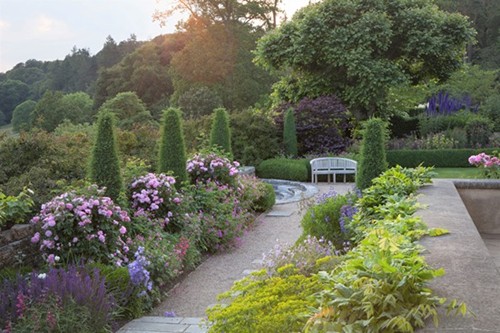
What makes Fonthill so compelling in June and July is this sense of continuity. One planting gives way to another, one colour fades as the next intensifies. There’s always something just coming into it's own. It’s a garden that rewards curiosity and invites you to wander a little further than you meant to.
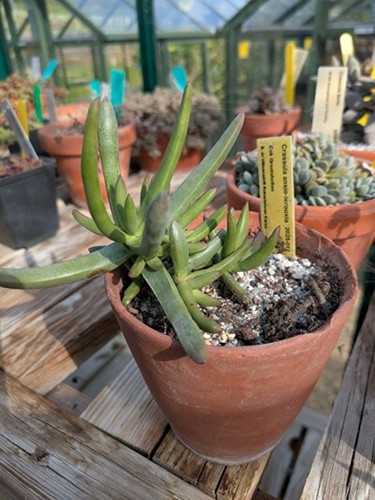
Fonthill House is also proud to be the home of the National Collection of Crassula, arranged by botanical section and housed within a greenhouse.
The following is a description by Chris Rodgerson:
Crassula is a large, diverse and widespread genus of succulent plants with well over 200 different species. There are also many hybrids and cultivars. In nature, the majority of 150 or so mostly grow in the Western and Northern Capes of South Africa winter rainfall areas. Some are also found in the Eastern Cape summer rainfall zone and even a few which may receive rain at any time. They can endure periods of drought, so they can survive on moisture from fog, mist and morning dew. Many enjoy the shade and protection of bushes but may also be found in the open, on plains, in and under cracks in rocks, in grit pans and on mountain tops. Many different ones can often be found growing together and they invariably grow with other succulent plants such as Mesembryanthemum.
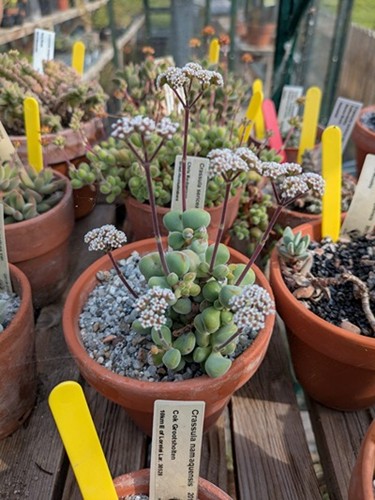
Most Crassula are perennial but there are also annual ones. They are extremely variable in size and shape. Some are dwarf miniatures, some grow into larger bushes or small trees. A few are monocarpic so die after flowering and some grow from corms and tubers. It's a fascinating genus of plants to collect and grow.
For details for this NEW fair at Fonthill House Gardens - please see our event page Fonthill House Gardens on our Rare Plant Fair website. Do come and see for yourself....
Fairs
Past Fairs:
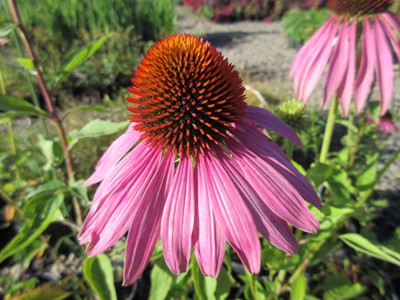 Share our Enthusiasm for Echinacea - Read More..
 Fabulous Fronds - Start of our Journey - Read More..
 2027 Rare Plant Fair Dates - Read More..
 Fonthill House Garden - Read More..
 Thyme and Friends in the Garden & Kitchen - Read More..
